George
Wood
Work
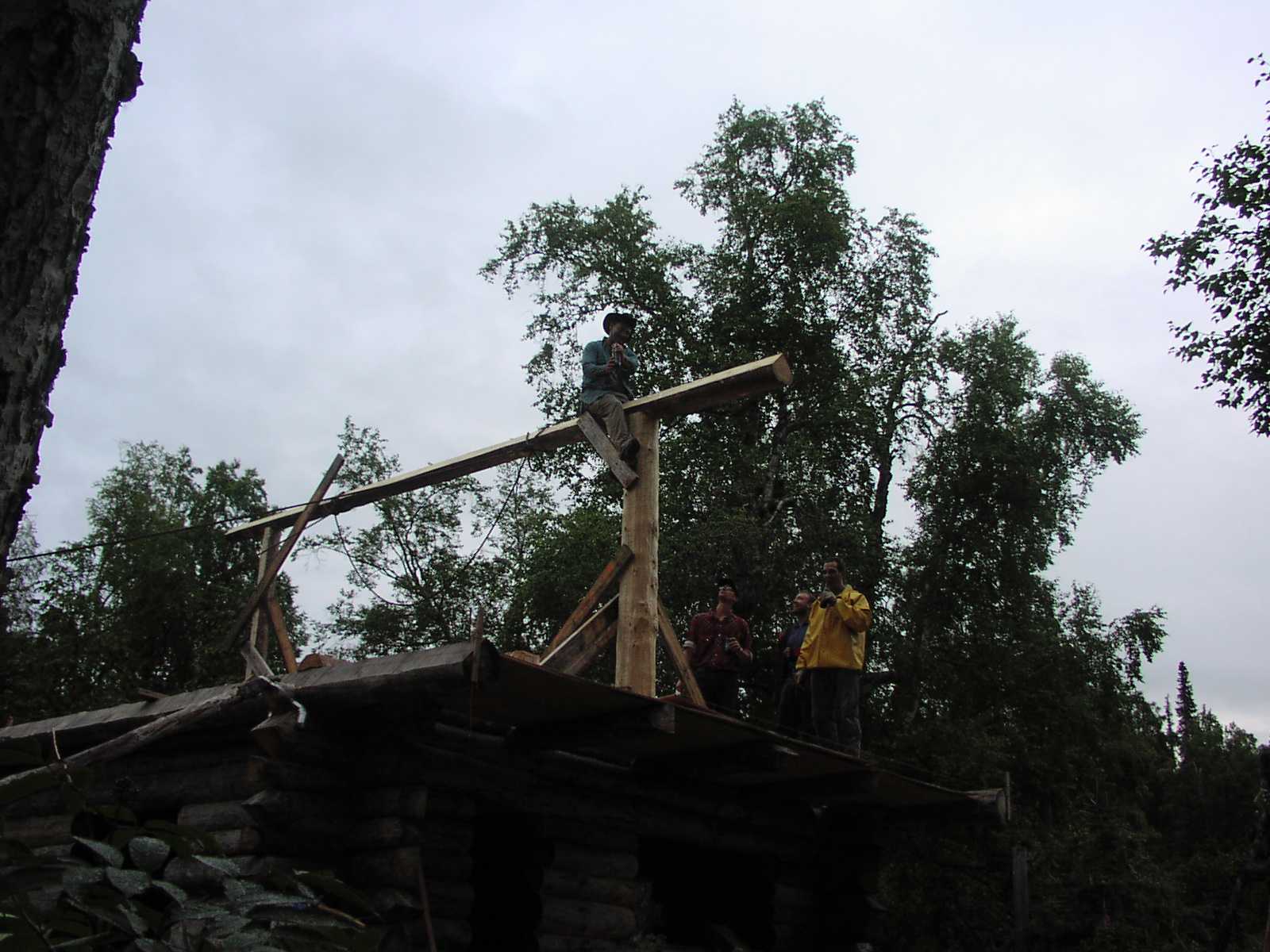
I received an invitation in the Summer of '01 to come to Alaska and help finish up a log cabin in the bush. Having never been to Alaska, it sounded like an adventure. So I loaded my backpack with some camping gear and around 80 pounds of steel tools for timber framing and back country carpentering. Bought a ticket to Anchorage and set off.
Some friends of a friend had been working on this cabin for several years. Each summer, they would get dropped off by some bush pilots they knew and live on bourbon and peanut butter while hauling logs by hand piling them up into a log pen about 20 foot square.
When I arrived in Anchorage, I found my way to a contacts house. We didn't know one another at all, but the friend we all had in common knew us all well. I was greeted enthusiastically and filled in on the details. We were going to load up a rental truck with a big stack of lumber, roofing materials, a big iron wood stove, tools, guns, and fuel for the body and mind. We would then drive to Talkeetna Alaska and scare up their favorite bush pilots who would fly us out one at a time to the build site.
The small bush planes took us out one by one and dropped us on a stream bed gravel bar in the bottom of a valley. The site was well up the valley side. it took about 7 flights to get the four of us out with our tools and gear. The materials would be brought by helicopter in a few days time. We spent the first night in a small cabin on the bank with the pilots. Stories, drink and food gave way to sleep.
In the morn, we hiked out gear up the hill to where the log pen stood. The first day involved setting up the camp. Two of the three were brothers and had grown up in Alaska. I got the drill about Grizzlies and confirmed I could shoot. The rifle was always nearby. We pitched a tent, dug a latrine, set up an outdoor kitchen and after a good ten or twelve hour day, sat down around a fire to discuss the work ahead.
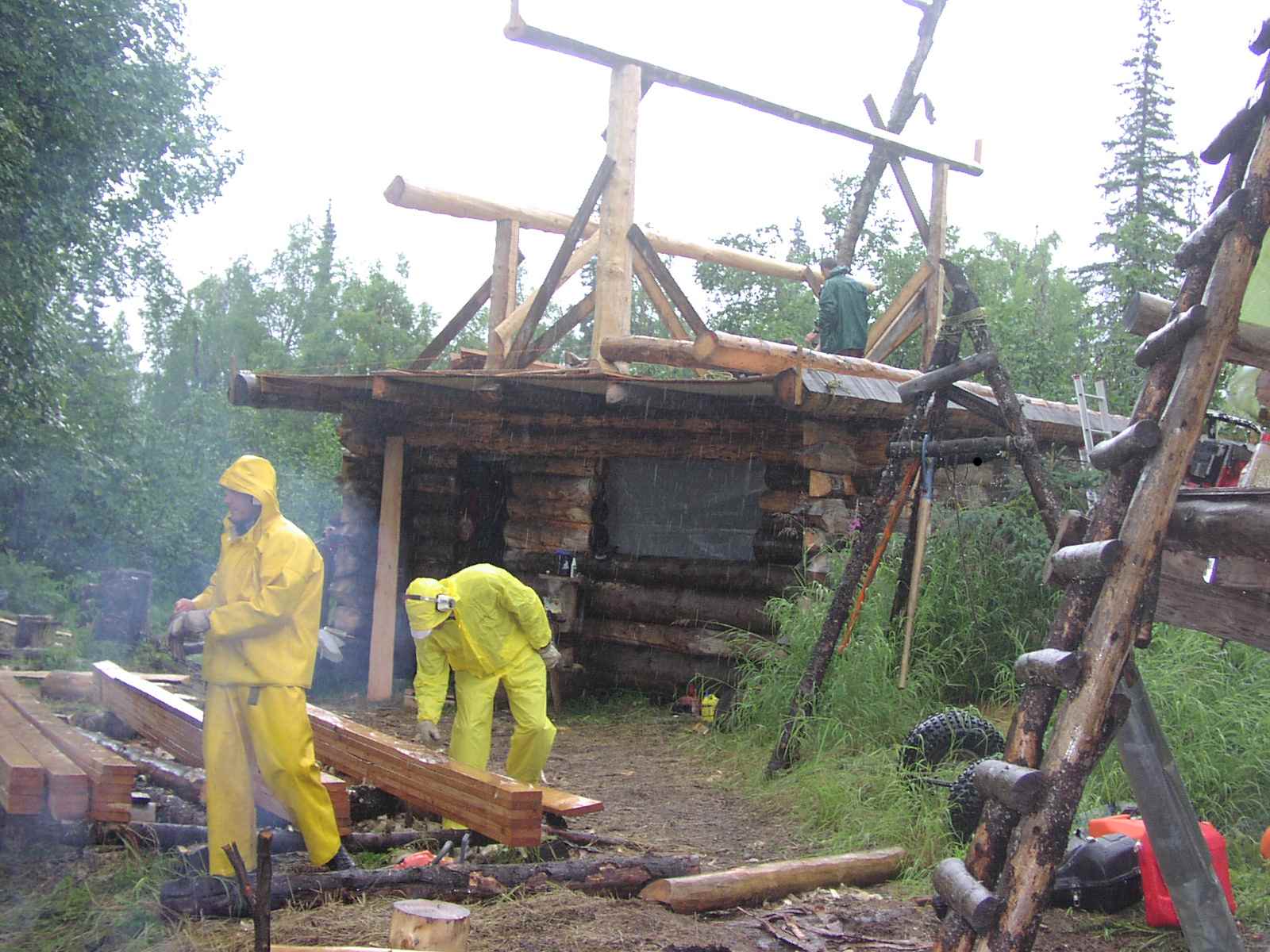
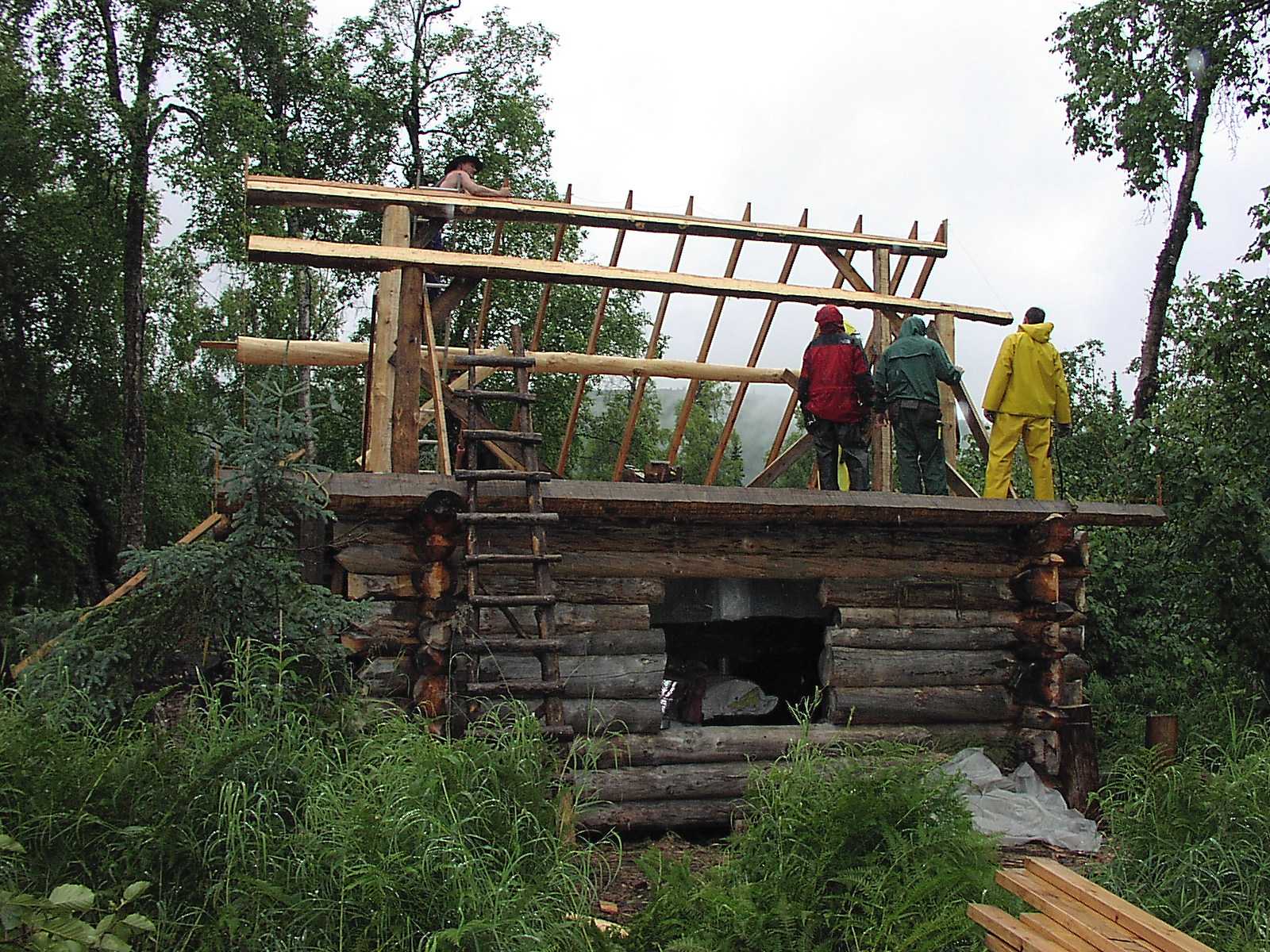
The primary objective was to get the cabin under roof and in about two and a half weeks. A few last two logs had to be brought out, skinned and pushed up into place to lock the pen. The roof rafters would rest on these logs. A few more logs would also have to be found in the forest and fashioned into a ridge beam, posts and purlins. It was explained that the snow was routinely 10 to 15 feet deep in the dead of winter.
It was also explained that the winds would approach 100mph and the roof had to be well fastened. A loose corner would allow the whole roof to peel off. Having a fair bit of experience with logs and timber frame construction, I helped layout the roof framing. Used a string line to establish planes and squares - they looked at me a little funny at first, but as it started to work, it began to make sense.
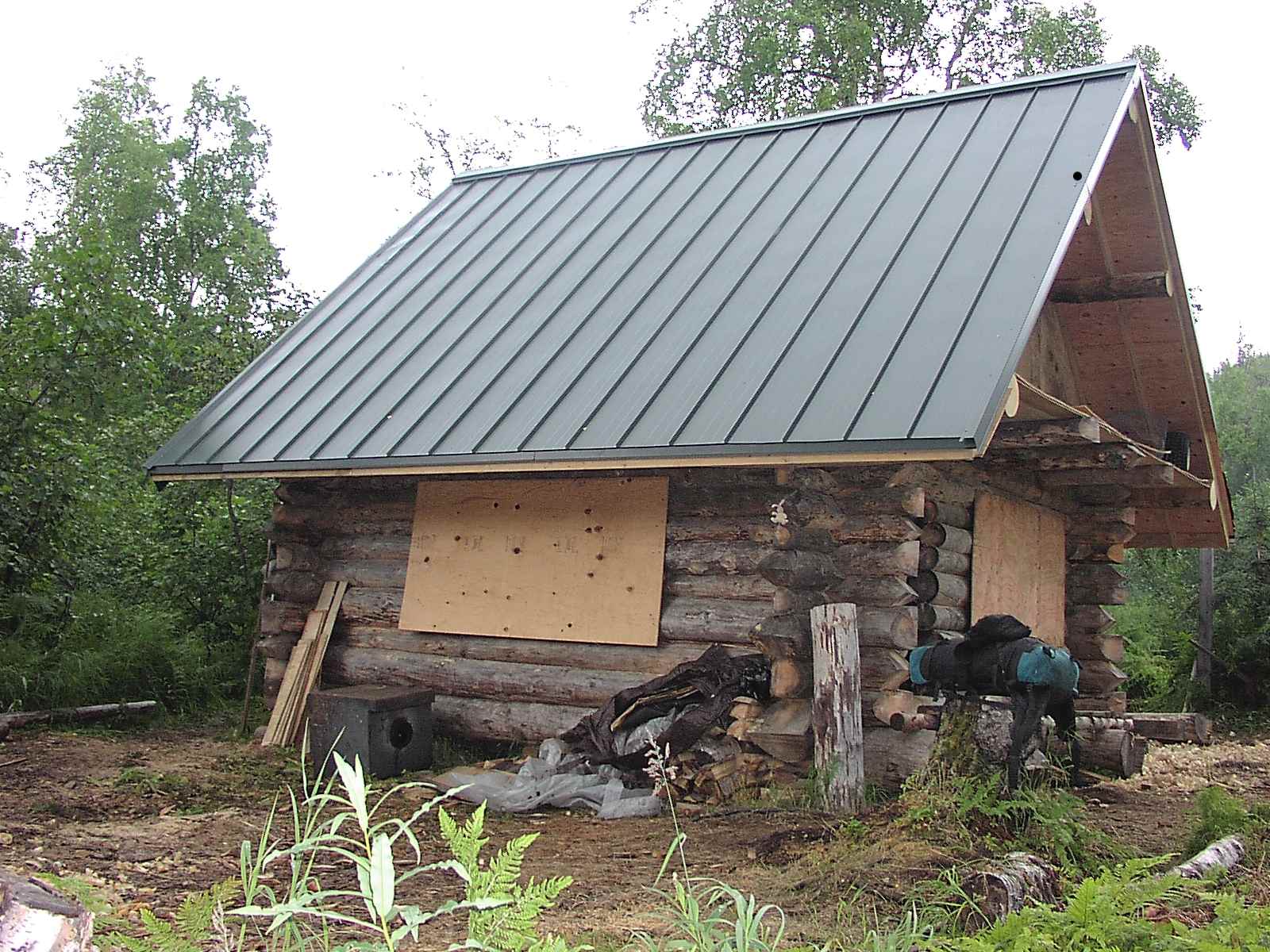
We were out there about two weeks, working from dawn to dusk, a good many hours in Alaska in July. The roof got done, and we started making jambs for windows and doors with the hand tools I had brought. Even made a ladder for climbing up to the loft.
the art of
problem
solving
 |
| Click image to view full finished image |